
Mammoth Hunters
KAYAC Inc.Action
3.8216.00 Reviews
- Version
- 018
- Installs
- 1.00M
- Age Rating
- Mature 17+
Screenshots
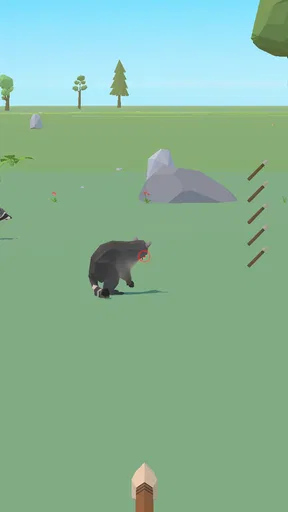
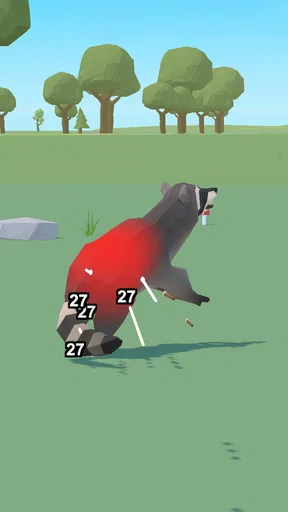
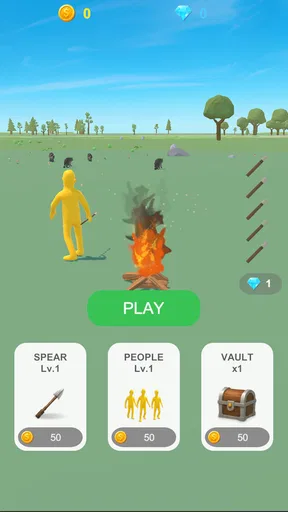
Our Review of Mammoth Hunters
 Analysis by Appyee
I went into Mammoth Hunters expecting a quick action game built around a simple prehistoric idea, and that is exactly where its first appeal comes from. You take on giant beasts with stone spears, build up your tribe, and work toward bringing down Mammoths. The concept is easy to understand within moments, but the real question is whether that loop has enough depth to remain interesting after the initial novelty wears off.
My early impression is that this is best approached as a compact, focused mobile action game rather than a full survival simulation. It does not need a complicated premise to get moving. The attraction is immediate: prepare, hunt, improve your group, and try to handle a much larger creature than yourself. That directness makes it approachable, especially when I only have a short break and want something more active than a passive time-killer.
KAYAC Inc. is the developer behind this free action game, which carries a Mature 17+ content rating. It is available for devices running Android 5.1 or later, and the current version is 018. Those details make it accessible to a broad range of Android phones, although the experience of playing any action title can still vary depending on a device’s screen, performance, and control response.
Why the first week feels so appealing
The strongest part of the opening experience is the clarity of the central goal. I do not need to learn a large fictional universe before understanding what I am doing. The stone spear immediately communicates the game’s tone: primitive tools, dangerous prey, and a tribe that has to grow stronger through action rather than comfort.
That simplicity is useful on a phone. Many action games bury their best idea beneath menus, currencies, tutorials, and layers of equipment. Here, the prehistoric hunting fantasy gives every early decision a recognizable purpose. When I improve my tribe, it feels connected to the next hunt instead of being an unrelated upgrade screen attached to a generic combat game.
The first few sessions benefit from a satisfying contrast between vulnerability and ambition. A Mammoth is not just another target with a different appearance; it represents the kind of threat that makes the tribe’s progress matter. Even when the action is straightforward, the scale difference helps create a sense of occasion. I am not simply clearing another enemy. I am preparing for a hunt that should test whether the group has developed enough.
That makes the game particularly suitable for players who like light progression wrapped around action. If you enjoy seeing a small group become more capable, but do not want a large role-playing system demanding constant attention, this approach has a natural appeal. It also works for people who prefer a clearly stated objective over open-ended wandering.
One useful habit is to treat each hunt as an experiment rather than rushing straight toward the largest possible target. I found that paying attention to how the tribe handles pressure is more valuable than thinking only about the reward at the end. A failed attempt can show whether the problem is poor timing, insufficient growth, or an overly ambitious target. That mindset gives the early game more texture than simply repeating attacks until something falls.
The free price lowers the barrier to trying it, but it also changes how I judge the experience. I am willing to accept a focused loop if it gives me a reason to return, yet I do not want to mistake an entertaining first session for a complete long-term game. The opening is effective because the fantasy is strong and the objective is readable. The harder test is whether tribe growth and hunting remain meaningful once the basic surprise has disappeared.
The game has already reached over a million installs, with an average rating of 3.6 from around five thousand ratings and just over two hundred written reviews. I read that as a sign of broad curiosity rather than a guarantee of lasting satisfaction. The premise clearly attracts attention, but a middling average also suggests that the experience may not suit every player once the initial hook has done its work.
Who gets the most from the opening
I would recommend the first-week experience to someone who wants an action game with a strong visual and thematic identity but a low learning burden. The prehistoric setting gives it more personality than an anonymous arena, and the tribe-building angle adds a reason to care about progress.
It is less suitable if you are looking for a deep historical strategy game, a detailed survival sandbox, or a story-heavy adventure. The appeal is concentrated around hunting and advancement. Players who need extensive exploration, complex diplomacy, or a large collection of distinct activities may feel that the premise is carrying too much of the experience.
It also makes a good short-session choice for a commute or a wait in a queue, provided you are comfortable with action that may ask for attention rather than background play. I would not choose it when I want a calm game that can be played almost automatically. The hunting theme implies focus, and the more seriously I take the larger encounters, the less it feels like something to leave running while doing something else.
What remains after the novelty fades
The month-to-month question is not whether the Mammoth idea is memorable. It is whether the tribe’s development creates a recurring routine that feels worthwhile. For me, the answer depends on how much satisfaction I get from repeating the basic relationship between preparation and risk.
There is a potentially appealing rhythm here: return to the game, strengthen the group, attempt a more demanding hunt, and use the result to decide what to improve next. That structure can support regular play because it turns progress into a series of practical questions. Should I push forward now, or spend more time making the tribe ready? Is the next hunt a sensible challenge, or am I relying on hope?
The best long-term use case is for players who enjoy gradual mastery more than constant novelty. If your pleasure comes from refining a familiar routine and seeing a once-dangerous challenge become manageable, the game has a reasonable chance of staying useful on your phone. It can become a small ritual rather than a game that must reinvent itself every session.
My concern is that a focused hunting loop can become predictable if tribe growth does not keep changing the decisions. The first encounter with the game is memorable because the premise is unusual. Later, the same premise has to be supported by meaningful variation in how hunts are approached. Without that, the player may feel that progress is only making the same action easier rather than opening a new layer of play.
This is where I would set expectations carefully. The store summary promises giant-beast hunting, tribal growth, and Mammoth battles, not an enormous range of unrelated modes. I would therefore install it for that specific fantasy, not because I expect it to replace every other action game on my device. Its recurring value comes from the quality of that central loop, not from pretending it is a broad all-purpose adventure.
A practical way to extend its life is to give each session a small purpose. Instead of playing until the action feels dull, I would decide whether the goal is to test a hunting approach, make a particular improvement, or see how far the tribe can progress before taking a larger risk. This prevents the game from becoming an empty repetition of taps and attacks. It also makes failure informative rather than merely frustrating.
That approach reveals one of the game’s less obvious trade-offs: progression can be motivating precisely because it gives the player a reason to repeat the hunt, but it can also expose repetition more clearly. If I am improving because I want to change how I play, the system feels useful. If I am improving only to raise a number before doing the same thing again, the reward loses its force quickly.
How it compares with familiar alternatives
Compared with a conventional action game built around individual heroes, this title places more emotional weight on the group. I am not only asking whether my own character can survive; I am thinking about the tribe as a developing unit. That gives the progression a communal flavor that a standard one-versus-many brawler may not provide.
Against survival games, however, the hunting focus makes it feel more directed. A survival alternative may offer crafting, shelter, exploration, resource management, and a larger sense of place. Mammoth Hunters is the better choice when I want the central objective to remain visible and immediate. It is the weaker choice if gathering, building, and discovering an expansive world are the main reasons I play.
It also differs from strategy games that let me plan from a distant viewpoint. The prehistoric theme may suggest careful preparation, but the action category means I still want to feel involved in the hunt. Players who prefer issuing orders, optimizing a settlement, or studying long-term maps may find more satisfaction elsewhere. This game suits someone who wants strategy to support action, not replace it.
For a friend choosing between this and a polished, content-heavy action favorite, I would describe the trade-off plainly. Mammoth Hunters offers a more unusual premise and a more concentrated routine. The larger alternative is likely better for variety and long-term breadth. I would pick this one when I want a distinctive short-session game, not when I want one title to occupy all my gaming time.
Maintenance, fatigue, and the cost of returning
Every mobile game asks for a little maintenance, even when that maintenance is simply remembering why I installed it. In this case, the burden is mostly mental: I need to keep the tribe’s next objective in mind and decide whether another hunt is worth the attention. If the current improvement does not lead to a noticeably different challenge, returning can feel like routine without purpose.
That is not necessarily a flaw. Some players actively want a game with a stable, repeatable structure. A short hunting session can be easier to fit into daily life than a sprawling adventure that demands a long uninterrupted block. I can imagine playing it after work when I want a clear task and do not want to spend time learning a complicated new system.
The maintenance becomes less attractive when I am tired or distracted. Action games punish divided attention more than puzzle or idle games, and a hunt built around timing or positioning is not ideal when I am constantly switching between tasks. My advice is to play it during a defined break rather than treating it as a background companion. That small change makes the experience feel more deliberate and reduces the sense of friction.
The main source of fatigue is repetition without a fresh decision. A giant beast is an excellent first hook, but the image alone cannot carry every future session. I start asking whether I am adapting to a new situation or simply repeating a familiar sequence with a stronger tribe. That question is important because it separates genuine mastery from routine grinding.
Another possible fatigue point is the gap between the scale of the fantasy and the compactness of the loop. The idea of developing a tribe capable of defeating Mammoths sounds like the beginning of a large saga. If the actual play remains tightly focused, players expecting a broad prehistoric journey may feel that the concept promises more than the daily routine delivers. I do not see that as a contradiction, but it is a reason to approach the game with the right expectations.
There is also a social expectation attached to the Mature 17+ rating. I would not recommend installing it for a younger child simply because the controls or premise look accessible. The age classification should be treated as part of the decision, especially on a shared family device. For adults, it signals that the game’s presentation is intended for a mature audience even though the core objective is easy to understand.
One of my more useful tests for a game like this is the “one-week absence” test. If I stop playing for several days, do I feel curious about the next hunt, or do I feel that I am merely restarting a task? Mammoth Hunters has the best chance of passing when I left with a specific unfinished goal, such as preparing for a difficult encounter. It is less compelling when I quit immediately after a routine success with no new question to answer.
That is why I would avoid playing it in long, unfocused marathons. The opening can be exciting, but extended repetition makes the structure easier to see. Short sessions preserve the tension between preparation and danger, while long sessions risk turning the tribe into a checklist. This is a concrete limitation, but it is also an easy way to protect the game’s strongest qualities.
My long-term verdict
I see Mammoth Hunters as a distinctive action game with a clear identity and a sensible place on a phone, especially for players who enjoy tribe progression and giant-beast encounters. The free entry point makes it easy to sample, and the low minimum Android requirement means it is not restricted to only the newest devices. KAYAC Inc. has chosen a premise that communicates its purpose quickly, which is a real advantage in a crowded category.
Its lasting value depends on what I want from a mobile game. If I want a focused routine that combines direct action with gradual tribal growth, I can imagine keeping it installed and returning when I have a short, purposeful session available. The game earns that space when the next hunt gives me something to prepare for rather than merely another task to clear.
I would skip it if my priority is a large survival world, deep strategic planning, extensive narrative, or constant mechanical variety. I would also be cautious if I dislike repetition or if I need a game that can be played without sustained attention. The unusual setting may attract me initially, but it cannot compensate for a loop that no longer gives me meaningful decisions.
My final recommendation is therefore positive but selective. Try it if the idea of building a primitive hunting group and facing Mammoths sounds more appealing than another interchangeable combat arena. Keep your sessions focused, set a small objective before each hunt, and judge the game by whether your tribe’s growth changes your choices. The real test is not whether the first Mammoth feels impressive, but whether the next hunt still gives you a reason to come back.
For me, that makes it a worthwhile free download for the right player, rather than an automatic long-term favorite for everyone. It has enough personality to stand out, enough progression to support a habit, and enough repetition to demand honest expectations. If you enjoy compact action built around a single strong fantasy, it deserves a place on your shortlist.
Verdict
Strengths of Mammoth Hunters
- Engaging prehistoric hunting gameplay with a distinctive setting.
- Simple controls make it accessible for casual players.
- Varied animal encounters keep hunts from feeling repetitive.
- Short sessions work well for playing on the go.
- Stylized visuals give the game a memorable atmosphere.
Limitations of Mammoth Hunters
- Some missions can feel repetitive after extended play.
- Progress may become slower without investing significant playtime.
- Hunting mechanics may not appeal to players avoiding combat themes.
- The prehistoric setting offers limited narrative depth.
- Performance may vary on older Android and iOS devices.
Other Releases by KAYAC Inc.
View All
Ball Run 2048: merge number
Casual4.1

Number Master: Run and merge
Action4.4

Type Spin: alphabet run game
Racing4.5

Draw Action: Freestyle Fight
Action4.3
Similar Picks in This Category
View All
Temple Run 2: Endless Escape
Imangi Studios4.1

PUBG MOBILE
Level Infinite4.3

Free Fire: 9th Anniversary
GARENA INTERNATIONAL I4.4

Talking Tom: Hero Dash Run
Outfit7 Limited4.3

slither.io
Lowtech Studios3.9

Sniper 3D:Gun Shooting Games
Wildlife Studios4.6
Frequently Asked Questions
What is Mammoth Hunters?
Mammoth Hunters is a prehistoric-themed mobile game focused on hunting, exploration, and survival. Players take on the role of a hunter in an ancient world, tracking mammoths and other creatures while developing their character and equipment. The game combines action-oriented gameplay with progression elements, making it suitable for players who enjoy adventure games with a primitive, survival-inspired setting.
How does the gameplay in Mammoth Hunters work?
The gameplay generally revolves around exploring different areas, locating prey, preparing for encounters, and completing hunting-related objectives. You must pay attention to your surroundings, choose suitable equipment, and improve your abilities as challenges become more demanding. Success depends on more than simply attacking, since timing, preparation, and character upgrades can make a noticeable difference during difficult hunts.
Is Mammoth Hunters free to download and play?
Mammoth Hunters may be available as a free download, although the exact availability and monetization options can vary depending on the platform and version. Free-to-play games commonly include optional purchases, advertisements, or items that can speed up progression. Before downloading, it is worth checking the current store listing for in-app purchase details, supported devices, and any regional differences in pricing or access.
Does Mammoth Hunters require an internet connection?
Whether Mammoth Hunters can be played fully offline depends on the specific version installed and the features you want to use. Some gameplay elements may work without a constant connection, while updates, advertisements, cloud saves, purchases, or online services may require internet access. If offline play is important to you, check the official Google Play or App Store description before installing.
Is Mammoth Hunters suitable for children?
Mammoth Hunters may appeal to younger players because of its simple prehistoric theme, but parents should review the official age rating and content description before allowing installation. Hunting and combat themes, advertisements, in-app purchases, or online features may affect its suitability. It is also advisable to enable parental controls and review purchase settings, particularly when the game is used on a shared device.
Play our best games!


